)


Culture & LGBTQ+ History
20 Gay Clubs and Bars That Shaped Manila’s Queer Nightlife—from the 1990s to the 2020s
From the neon-lit streets of Malate to the drag stages of Ortigas and Quezon City, these venues trace how LGBTQ+ nightlife in Metro Manila moved, changed and survived.

Before dating apps, social media and online queer communities, gay bars served a much bigger purpose.
They were not merely places to drink or dance. They were meeting points where LGBTQ+ Filipinos could find friends, flirt openly, watch drag performers and briefly escape a society that often expected them to hide.
For decades, much of this world revolved around Malate—particularly the intersection of Maria Orosa and Julio Nakpil Streets. By the early 2000s, the neighborhood had become Manila’s unofficial gay district. On busy weekends, customers moved freely between bars while drag queens, dancers, vendors, students, professionals and tourists filled the surrounding streets.
But Manila’s queer nightlife never stayed in one place. As Malate declined, the scene migrated to Makati, Ortigas, Cubao, Bonifacio Global City and other parts of Metro Manila.
The foundations: the 1990s
1. Coco Banana
Although Coco Banana belonged mainly to the 1970s and 1980s, its influence reached into the early 1990s and shaped the culture inherited by the next generation of Manila clubs.
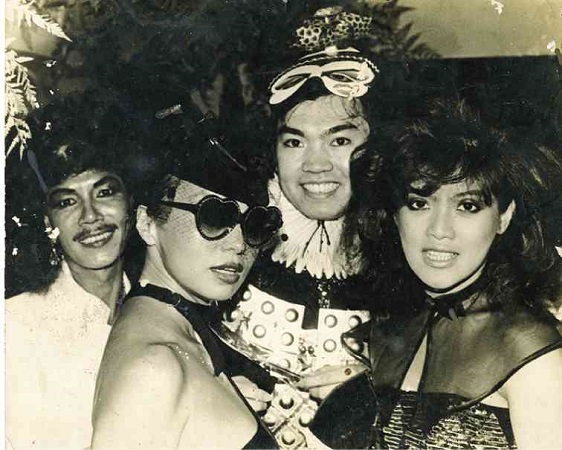
Opened in Malate in 1977 by fashion designer Ernest Santiago, Coco Banana was frequently described as Manila’s answer to Studio 54. It attracted gay men, celebrities, artists, fashion personalities, socialites and adventurous members of the city’s elite.
Its importance went beyond exclusivity or flamboyance. Coco Banana showed that a visibly queer nightclub could become one of Manila’s most fashionable destinations. It connected gay culture with fashion, performance, nightlife and social status long before LGBTQ+ visibility became common in mainstream media.
2. Blue Café
Blue Café was one of the early venues that helped transform Nakpil Street during the 1990s. The café hosted Wednesday-night drag performances and attracted LGBTQ+ customers as well as members of Manila’s wider bohemian community.
It existed when Malate was becoming known for art, alternative culture, restaurants and nightlife. Blue Café may not have had the scale of the clubs that followed, but it helped establish drag and queer entertainment as a regular, visible part of the neighborhood.
3. Penguin Café
Penguin Café was not exclusively gay, but no account of 1990s Malate would be complete without it. It attracted artists, writers, musicians, journalists, students, activists, foreigners and LGBTQ+ customers.
Its importance came from its atmosphere. It was less about polished appearances and more about conversation, experimentation and the freedom to be unusual. Queer Manila did not grow only inside gay clubs; it also grew in bohemian spaces where difference was welcome.
4. The Library
The Library became one of Manila’s best-known comedy and entertainment bars. Founded by the late performer Andrew de Real, it became closely associated with stand-up comedy, impersonations, musical performances and sharp exchanges between performers and audience members.
For many customers, The Library was their first encounter with live gay comedy. It demonstrated how queer performers could control a room not by hiding their identities, but by turning their experiences, humor and personalities into the main attraction.
Malate at its peak: the late 1990s and 2000s
5. Joy
Joy was among the clubs remembered from Malate’s peak years. It belonged to the dense network of venues around Orosa and Nakpil where customers could move from one bar to another in a single night.
Joy may no longer have the name recognition of BED or O Bar, but it formed part of the ecosystem that made Malate feel like an LGBTQ+ district rather than simply a neighborhood containing one gay establishment.
6. Mint
Mint was another recognizable name during the height of the Malate scene. Like several clubs from that era, much of its history survives through former customers’ memories rather than detailed online records.
Its inclusion matters because nightlife history is not built only around the biggest institutions. Smaller and shorter-lived venues also gave people places to meet, dance and feel part of a community.
7. Red Banana
Red Banana occupied a prominent position near the Orosa–Nakpil intersection. It became known for dancing, cabaret-style entertainment, go-go performers and a more sexually charged atmosphere than some neighboring venues.
The club also reflected the complicated Philippine meaning of “gay bar.” The term could describe an LGBTQ+ dance club, a drag venue or an establishment featuring male entertainers. These categories sometimes overlapped, but did not always serve the same audience or purpose.
8. BED Bar
For many gay men who experienced Malate in the 2000s, BED was the club. It was large, modern, crowded and strongly associated with electronic dance music.
BED represented a shift toward the international style of gay clubbing: powerful sound systems, themed parties and dancing that continued until morning. Its closure in Malate in 2013 was more than the loss of one business; it was widely understood as evidence that the district itself was disappearing as Manila’s gay center.
9. O Bar Malate
O Bar opened in Malate in December 2005 and became famous for combining dancing with polished drag production numbers. Its performers presented group choreography, costumes, comedy, impersonations and theatrical routines—not merely isolated lip-sync numbers.
O Bar later opened a larger branch in Ortigas. The original Malate venue closed in 2013, but the brand survived, something few establishments from the old district managed to accomplish.
10. Che’lu
As one Malate establishment after another closed, Che’lu became known as the neighborhood’s last major gay holdout. It offered dancing, drag performances, male entertainers and affordable drinks.
More importantly, it continued operating when the surrounding streets had already lost much of their queer identity. Its survival became almost symbolic: a final patch of bright light on a street where the other familiar signs had gone dark.
Beyond Malate: Makati, Ortigas and Quezon City
11. Club Government
Club Government helped move gay nightlife away from Malate and toward Makati. With an industrial design, electronic music and fashionable crowd, it attracted customers seeking a contemporary clubbing experience.
Its success suggested that Manila’s gay community had not disappeared. It was simply becoming more geographically dispersed.
12. O Bar Ortigas
The Ortigas branch allowed O Bar to outlive the decline of Malate and develop into one of the Philippines’ most prominent drag venues. Its stage has featured performers who later appeared on Drag Race Philippines, alongside visiting international queens.
O Bar Ortigas represents continuity. It connects the culture of the Orosa–Nakpil years with the professional drag industry of the 2020s.

13. Club Mwah
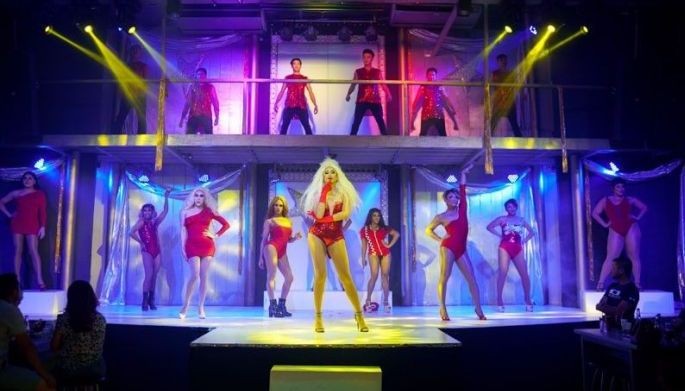
Club Mwah occupies a space between nightclub, cabaret and theatrical revue. Its productions are known for elaborate costumes, large headdresses, impersonations, choreography and glamorous staging.
Unlike clubs centered mainly on drinking and dancing, Club Mwah places the show at the heart of the experience. It demonstrated that queer performance could be presented as a full theatrical production rather than a brief attraction between DJ sets.
14. Rapture Café Bar
Rapture became a familiar LGBTQ+ venue in Cubao. Videoke, comedy, singing and live performances gave it the atmosphere of a neighborhood entertainment bar rather than a vast dance club.
Its popularity showed that queer nightlife was no longer dependent on Malate. Cubao had its own audience and personality, allowing people from Quezon City and nearby areas to enjoy LGBTQ+ entertainment without crossing the metropolis.
15. Fahrenheit Café and Fitness Center
Fahrenheit combined several elements of gay social life under one roof. It operated as a café, bar, dance venue, fitness space and men’s club.
Its format reflected a period when gay establishments increasingly offered more than a conventional nightclub experience. It also showed how the boundaries between a bar, club, wellness venue and social space could blur within Manila’s LGBTQ+ scene.
16. The One 690 Entertainment Bar
The One 690 became one of Quezon City’s recognizable male-entertainment venues. It featured dancers and scheduled stage shows, representing another side of the Philippine gay-bar tradition.
Venues such as One 690 belong to queer nightlife history, but they also invite questions about labor, class, desire and economic inequality. Behind the fantasy presented onstage were performers working in an industry that was not always understood or respected by the wider public.
A new model of queer nightlife: the 2010s and 2020s
17. Today x Future
Today x Future—or TxF—became one of Cubao’s best-known alternative nightlife spaces. It was not exclusively gay. Instead, it welcomed a mixed crowd of LGBTQ+ people, artists, musicians, designers and others comfortable outside mainstream club culture.
Its unpretentious interior and eclectic music created a different kind of queer space. Customers did not necessarily need a large Pride sign at the door to know they were welcome; the crowd itself created that sense of belonging.
18. Nectar Nightclub
Nectar brought a polished LGBTQ+ club experience to Bonifacio Global City. Located at The Fort Strip, it became known for DJs, themed parties, go-go dancers, drag queens and a fashionable crowd.
Its location reflected the movement of queer nightlife toward newer commercial districts and higher-income customers. The original BGC venue later closed amid changes to The Fort Strip, another reminder that even successful queer spaces remain vulnerable to redevelopment and changing property markets.
19. Apotheka
Apotheka in Poblacion represents the more fluid queer nightlife of the 2020s. It is not exclusively an LGBTQ+ club, but it has hosted queer parties, drag performances, underground music events and independent collectives.
In earlier decades, queer people often depended on permanent gay bars. Today, organizers, DJs, performers and audiences can temporarily transform a mixed club into a queer space for the night. This offers variety and creative freedom, although it can make queer nightlife feel temporary and harder to locate.
20. Rampa Drag Club
Opened in Quezon City in 2024, Rampa placed drag performance at the center of its identity. Prominent LGBTQ+ personalities and drag artists—including Precious Paula Nicole, Viñas DeLuxe and Brigiding—were involved in its development.
Rampa reflects the influence of Drag Race Philippines and the widening mainstream audience for Filipino drag. Performers who might once have worked in small comedy bars can now build national followings, attract partnerships and appear alongside international queens.

From a gay district to a scattered community
The history of these venues is also the history of a disappearing neighborhood.
During the height of Malate, LGBTQ+ people did not need to organize an entire evening around one establishment. They could eat at one place, watch a performance at another, dance somewhere else and meet friends on the street between them.
That density created community.
Malate’s decline resulted from several forces: rising costs, traffic, redevelopment, changing work patterns, safety concerns and the arrival of dating apps and social media. As Metro Manila expanded, LGBTQ+ customers also moved toward Makati, Ortigas, Cubao, BGC and Quezon City.
Queer nightlife did not die. It became scattered.
More than places to party
It is easy to romanticize old clubs after they disappear. Memories preserve the music, lights and excitement while quietly removing the bad drinks, police harassment, discrimination, financial struggles and personal risks.
Still, these establishments mattered.
They provided stages to performers whom mainstream television often reduced to jokes. They gave closeted customers somewhere to see other people like themselves. They allowed friendships and relationships to form before an app could locate the nearest available person. They also created small territories where queer Filipinos could occupy public space without apologizing.
A nightclub is a business, and businesses eventually close. But a queer venue is also a collection of human experiences.
The building may disappear. The sign may be removed. The dance floor may become a convenience store, restaurant, condominium or empty commercial unit. Yet the people who once gathered there carry something away with them—a song, a friendship, a first kiss, a chosen family or perhaps the first evening when they realized they were not alone.
That is why Manila’s old gay bars deserve to be remembered not merely as places where people partied, but as places where generations of LGBTQ+ Filipinos learned how to be visible.
Selected sources and further reading
- “The Death of Gay Malate,” Kyoto Review of Southeast Asia
- “The Slow and Painful Death of Malate,” Outrage Magazine
- “Che’lu: Malate’s Last Holdout,” Outrage Magazine
- “Coco Banana: Where Manila Boogied the Night Away,” Lifestyle Inquirer
- “An Ode to O Bar,” The Philippine Star
- “Drag Art’s Forward Rampa,” Art+ Magazine
Editorial note: Venue names, locations and operating status can change. Readers with photographs, corrections or personal memories from these spaces are encouraged to contribute to the historical record.

No comments:
Post a Comment
We'd love to hear from you. Comment your reactions below.